Are you staring at an overgrown lot and wondering how to turn that tangle of vegetation into a usable space? Whether you're planning to build your dream home near Lake Nona or simply want to reclaim your backyard from invasive Florida weeds, preparing your land is the first big step. It’s not just about knocking down trees; it’s about setting a solid foundation for whatever comes next.
Land clearing is the process of removing trees, stumps, brush, stones, and other obstacles from an area to make it suitable for land improvement or construction. For Florida homeowners, this often involves battling dense palmetto bushes, aggressive vines, and sandy soil that requires specific handling. Choosing the right method depends on the size of your lot, your budget, and what you plan to do with the land afterward.
In this guide, we’ll walk you through the four main ways to clear land, the costs involved, and the specific challenges we face here in Central Florida.
What are the different ways to clear land?
The four primary methods of land clearing are manual, mechanical, chemical, and burning. Each has its place, and often, a professional excavation company Orlando Florida homeowners trust will use a combination of these techniques to get the job done efficiently.
Let's break down each method so you can understand what might be right for your property.
1. Manual Clearing: The Hands-On Approach
Manual clearing involves using hand tools like chainsaws, axes, shovels, and pickaxes to remove vegetation. It is the most labor-intensive method but offers the highest level of precision.
Why would you choose this?
If you have a small backyard in Winter Park and want to save specific oak trees while removing the underbrush, manual clearing is your best bet. It causes the least amount of soil disturbance, which is great for preventing erosion. However, it's physically demanding and time-consuming.
Pros:
- Precision: You can selectively remove specific plants without damaging others.
- Low Impact: Heavy machinery isn't compacting your soil.
- Equipment: No need for expensive heavy equipment rentals.
Cons:
- Time: It takes significantly longer than other methods.
- Labor: It is back-breaking work, especially in the Florida heat.
- Limitations: It is impractical for large lots or removing large stumps.
2. Mechanical Clearing: The Heavy Lifters
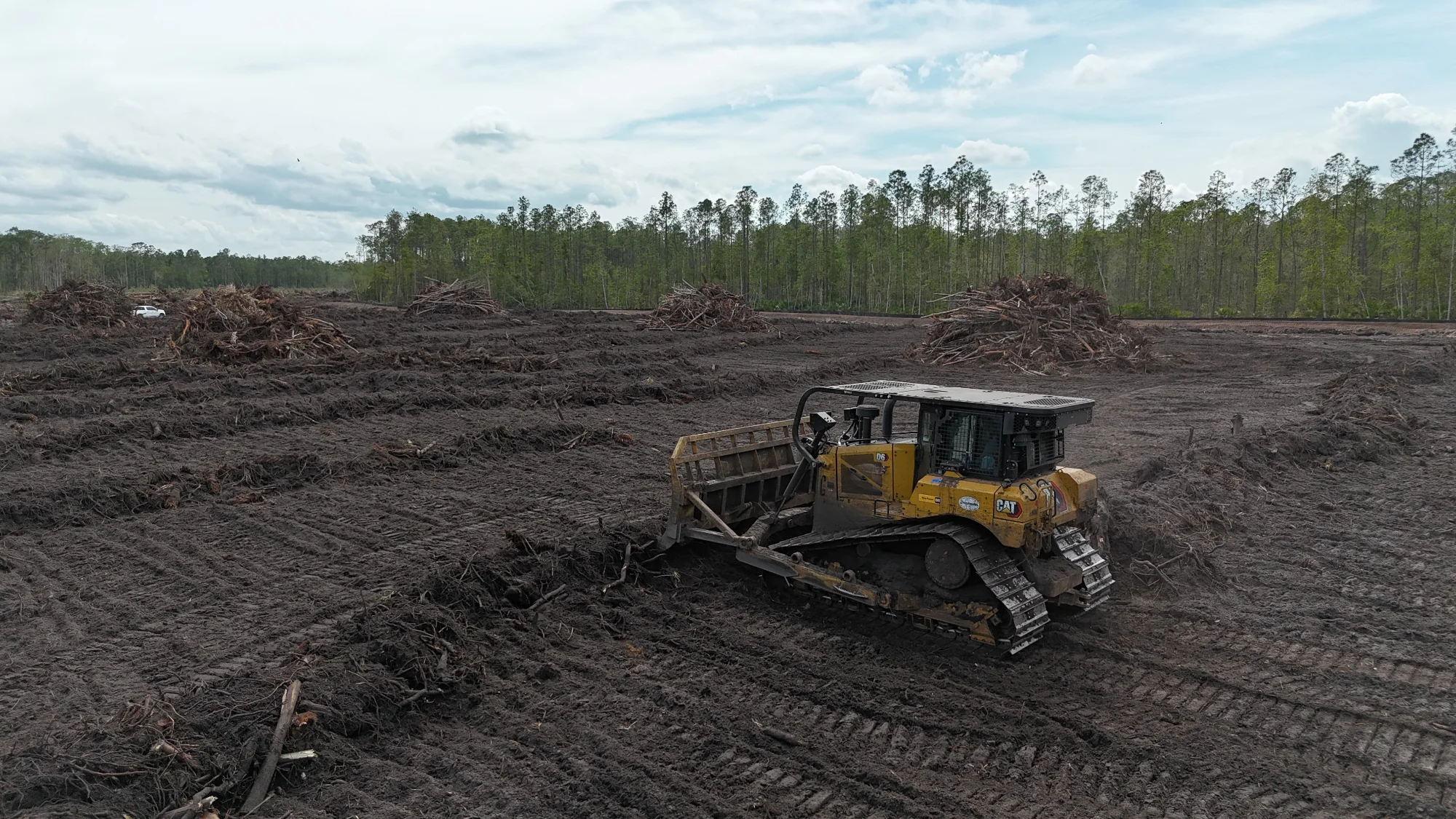
When you have a lot of ground to cover, mechanical clearing is the standard. This involves using heavy machinery like bulldozers, excavators, and skid steers to knock down trees, grub out stumps, and clear brush.
How does it work?
An excavator or bulldozer pushes over trees and rips roots out of the ground. This is the most common method used by a professional excavation company Orlando Florida residents hire for new home sites or large renovations.
One specific technique within this category is forestry mulching. This uses a machine to shred vegetation right where it stands, leaving a layer of mulch behind. This is excellent for soil health but doesn't remove the root systems required for building foundations.
Pros:
- Speed: Large areas can be cleared in days, not weeks.
- Efficiency: Can handle large trees and deep root systems.
- Versatility: Capable of grading the land after clearing.
Cons:
- Soil Disturbance: Heavy tracks can compact the soil.
- Cost: Requires professional operators and equipment.
- Debris: Leaves behind large piles of material that need to be hauled away or burned.
3. Chemical Clearing: The Weed Killer Strategy
Chemical clearing involves applying herbicides to kill vegetation. This is rarely used as a standalone method for total clearing but is often used to prepare a site before mechanical clearing or to maintain a cleared area.
Is it safe?
While effective at killing aggressive weeds, chemical clearing requires careful handling to avoid contaminating the soil or nearby water sources—a major concern given our proximity to the aquifer and local lakes.
Pros:
- Ease: Minimal physical labor required.
- Control: Good for managing invasive species before they spread.
Cons:
- Environmental Impact: Risk of runoff affecting water quality and wildlife.
- Timeframe: Takes weeks for the vegetation to actually die.
- Appearance: Leaves behind standing dead vegetation that still needs to be removed.
4. Burning: The Old School Method
Controlled burns involve setting fire to vegetation to clear land. In agricultural settings, this is common. However, for residential lots in places like Sanford or Altamonte Springs, "burning" usually refers to piling up cleared debris and burning it on-site rather than hauling it away.
Why is this strictly regulated?
Florida has strict burn laws, especially during our dry season (typically October through May). An uncontrolled fire can threaten homes and wildlife. Furthermore, grinding is often a preferred alternative to burning because it's safer and recycles the organic material.
Pros:
- Cost-Effective: Eliminates hauling fees.
- Pest Control: Can help reduce populations of ticks and invasive insects.
Cons:
- Risk: Fire can easily escape control, especially with Florida winds.
- Regulations: Requires permits and strict adherence to county bans.
- Damage: Can sterilize the soil if the fire burns too hot.
How does land clearing affect the environment?
Land clearing significantly impacts the local ecosystem, affecting soil stability, wildlife habitats, and water drainage.
When you remove vegetation, you remove the root systems that hold the soil in place. In Central Florida, where our soil is sandy, this can lead to rapid erosion during our summer thunderstorms. Silt can wash into storm drains or nearby bodies of water like Lake Monroe, causing pollution issues.
Additionally, clearing disrupts local wildlife. Gopher tortoises, for example, are a protected species here. A reputable excavation company Orlando Florida homeowners hire will know how to identify tortoise burrows and follow the legal requirements to relocate them before work begins.
What are the best practices for eco-friendly clearing?
To minimize your environmental footprint, consider "selective clearing." Instead of bulldozing everything flat, identify the healthy, native trees you want to keep.
We also recommend mulching whenever possible. Instead of hauling debris to a landfill, grinding organic matter back into the earth enriches the soil and helps retain moisture—something your future lawn will thank you for. This approach reduces waste and prepares the ground for landscaping more naturally.
Why are Florida regulations so important?
Florida—and specifically Orange and Seminole Counties—has strict rules regarding tree removal and land alteration.
Before you cut down a tree, you often need a permit. For example, removing large oak trees usually requires approval from the county, and you may be required to replace them or pay into a tree fund. Ignoring these regulations can lead to hefty fines. The cost for clearing a lightly wooded lot can range from $1,500 to $3,000 per acre, but fines for illegal clearing can far exceed that.
Furthermore, Florida's weather plays a huge role. Hurricane season (June through November) means you need to be careful about leaving loose debris piles that could become projectiles in high winds.
Key Takeaways
Clearing your land is about more than just making space; it's about preparing for the future of your property safely and responsibly.
- Assess your needs: Manual is great for small tweaks; mechanical is necessary for construction.
- Watch the weather: Plan your clearing during the dry season if possible.
- Know the law: Check permitting requirements in your specific municipality.
- Think ahead: Consider how debris removal (like grinding) fits into your budget.
If you're ready to transform your property and need a reliable excavation company Orlando Florida locals have relied on for years, we are here to help. We understand the local terrain, the regulations, and how to get the job done right.
Ready to clear the way for your next project? Contact Drinkwater & Drinkwater at (407) 732-4530 today for a consultation.