
A low excavation bid that wins the contract and then generates change orders, delays, and unsuitable-soils surprises is not a win for anyone on the project. If you are evaluating proposals for an Orlando commercial site and want a scope review that tells you what you are actually comparing, call Drinkwater and Drinkwater at (407) 732-4530 or reach out online.
Orlando commercial developers and general contractors comparing excavation proposals for the same site frequently receive numbers that vary enough to raise real questions. Some of that range reflects genuine differences in overhead structure and equipment efficiency. Most of it reflects something simpler: the bids are not covering the same scope. A proposal that omits unsuitable soils allowances, excludes haul-off, or does not account for the site's actual stormwater compliance requirements is not a cheaper version of the same job. It is a different, incomplete job with a price tag attached that will grow once work begins. Here is how to read excavation proposals so you know which category each one falls into before you award the contract.
A complete excavation scope for a commercial project in Orlando should address four distinct phases, and a proposal that combines them into a single lump-sum line item without itemizing each is a proposal that is either incomplete or concealing the absence of something. Clearing, grubbing, cut and fill, and haul-off are separate operations with separate cost drivers, and a developer who does not know which of those operations a bid includes has no reliable basis for comparing it against competing proposals.
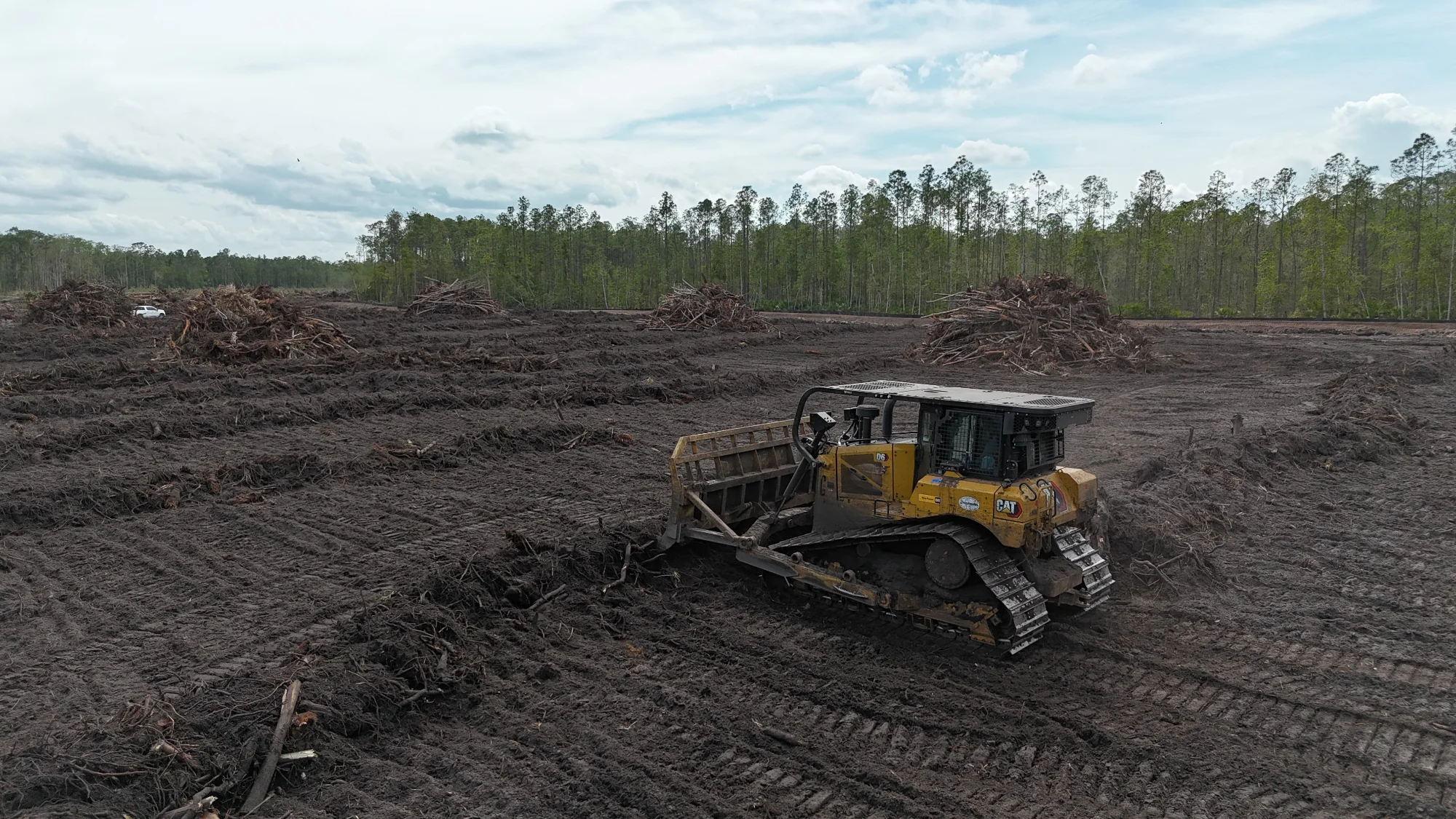
Clearing addresses the removal of surface vegetation, trees, and brush from the site footprint. Grubbing addresses what clearing leaves behind: root systems, stumps, and organic material below the surface that cannot remain in place under a building pad or improved surface. A site that has been cleared but not grubbed still contains subsurface organics that will compress and settle under load in ways that create differential settlement problems years after construction is complete. A proposal that prices clearing without specifying grubbing has not addressed the site to the standard a commercial building pad requires.
Cut and fill is where the earthwork budget lives. The cut volume is the material excavated from areas that need to come down to subgrade. The fill volume is the material needed to bring low areas up. On a site where the cut and fill balance well, the excavated material from high areas becomes the fill for low areas and haul-off is minimized. On a site that is net cut, the excess material needs to leave. On a net-fill site, material needs to come in. A proposal that does not address the site's cut-fill balance, or that assumes a balance that the site's actual topography does not support, will generate change orders the moment earthwork begins.
We see this constantly: developers receive excavation bids that look attractive until site work begins and the hidden costs start appearing as change orders. Unsuitable soils, additional haul-off, site preparation items that were not itemized in the original scope. Each time, we help the developer identify what the original bid actually covered and what it was quietly leaving out. The pattern is consistent enough that a bid without explicit unsuitable-soils language should raise immediate questions about what else is not addressed.
Unit pricing in an excavation bid allows you to understand what the contractor intends to charge for work beyond the base scope assumptions. A lump-sum bid gives you a number but no mechanism for evaluating what happens when actual conditions differ from the assumptions the number was built on. Unit pricing for earthwork, haul-off, unsuitable soil removal, and import fill gives you a transparent basis for evaluating change-order exposure before it materializes, and it lets you compare contractors on the rates they will charge for the work that varies rather than only on their base assumptions.
Unsuitable soils allowances address the reality that Orlando's subsurface conditions often include organic material, muck, or other material that cannot support the loads the project requires and must be removed and replaced with engineered fill. A proposal that does not include any unsuitable soils allowance is assuming either that the site has none, which is an assumption that requires a geotechnical report to support, or that the contractor plans to exclude unsuitable soil handling from their scope and bill it as a change order. Either interpretation is a problem for the developer's budget, and asking the contractor directly how they are handling unsuitable soils tells you quickly whether they have thought through the site or whether they are pricing to win and planning to recover margin later.
An excavation contractor whose equipment and crew are sized for smaller residential projects can technically perform commercial site work. They simply cannot perform it at the pace a commercial schedule requires, and a project that is behind on earthwork by day ten is behind on every subsequent trade that depends on the graded pad to proceed. The timeline implications of inadequate equipment capacity are not always visible in the bid, which is why asking the capacity question directly during the evaluation process matters.
Ask each bidder what equipment they are planning to mobilize for the project, how many pieces are available and how quickly they can scale up if conditions require additional capacity, and whether their crew is employed directly or relies on subcontracted labor. A contractor whose site crew is directly employed and whose equipment is owned rather than rented has more control over schedule response than one who is coordinating subcontractors and equipment rentals. When a site condition changes the plan, the response time difference between those two structures can be measured in days.
Equipment capacity also affects how the contractor handles parallel operations. A site where clearing and grubbing are complete on one area while grading is underway on another, and haul-off trucks are cycling continuously, moves faster than one where each operation is sequential because the contractor does not have sufficient equipment to run them in parallel. Ask how the contractor plans to sequence the operations on your specific site and whether their equipment inventory supports that sequence without gaps.
Commercial excavation in Orlando and throughout Orange County requires compliance with Florida Department of Environmental Protection stormwater rules, St. Johns River Water Management District permitting where applicable, and the City of Orlando or Orange County's local requirements depending on the project location. A bid that does not address how the contractor will handle NPDES permit compliance, erosion and sediment control installation, and the stormwater pollution prevention plan documentation has not accounted for a real cost of the work.
Erosion and sediment control measures, including silt fence installation, inlet protection, and stabilized construction entrances, are not optional additions. They are permit conditions that must be in place before significant earth disturbance begins and must be maintained throughout the project. A contractor who prices these as separate line items after the fact, or who treats them as the owner's responsibility, is creating permit compliance exposure for the project that the developer ultimately owns. A complete bid includes these costs and specifies how the contractor will maintain compliance through the duration of site work.
The SWPPP documentation requirement is a specific compliance item that affects both the permitting timeline and the ongoing site management responsibility. A contractor who understands these requirements and has produced SWPPP documentation for comparable Orlando commercial projects brings something to the project that a contractor operating at the residential scale typically does not have. Ask each bidder for examples of comparable commercial projects they have completed in the Orlando market and whether they have managed the permitting and SWPPP compliance for those projects directly.
If you are comparing excavation bids for an Orlando commercial project and want a scope review that tells you what each proposal actually covers, call Drinkwater and Drinkwater at (407) 732-4530 or request a scope review online. Our land clearing and grinding capabilities are part of a complete site preparation approach built for commercial timelines and commercial compliance requirements.

Copyright © 2023. All Rights Reserved.
Web Design, SEO & Hosting by REK Marketing & Design