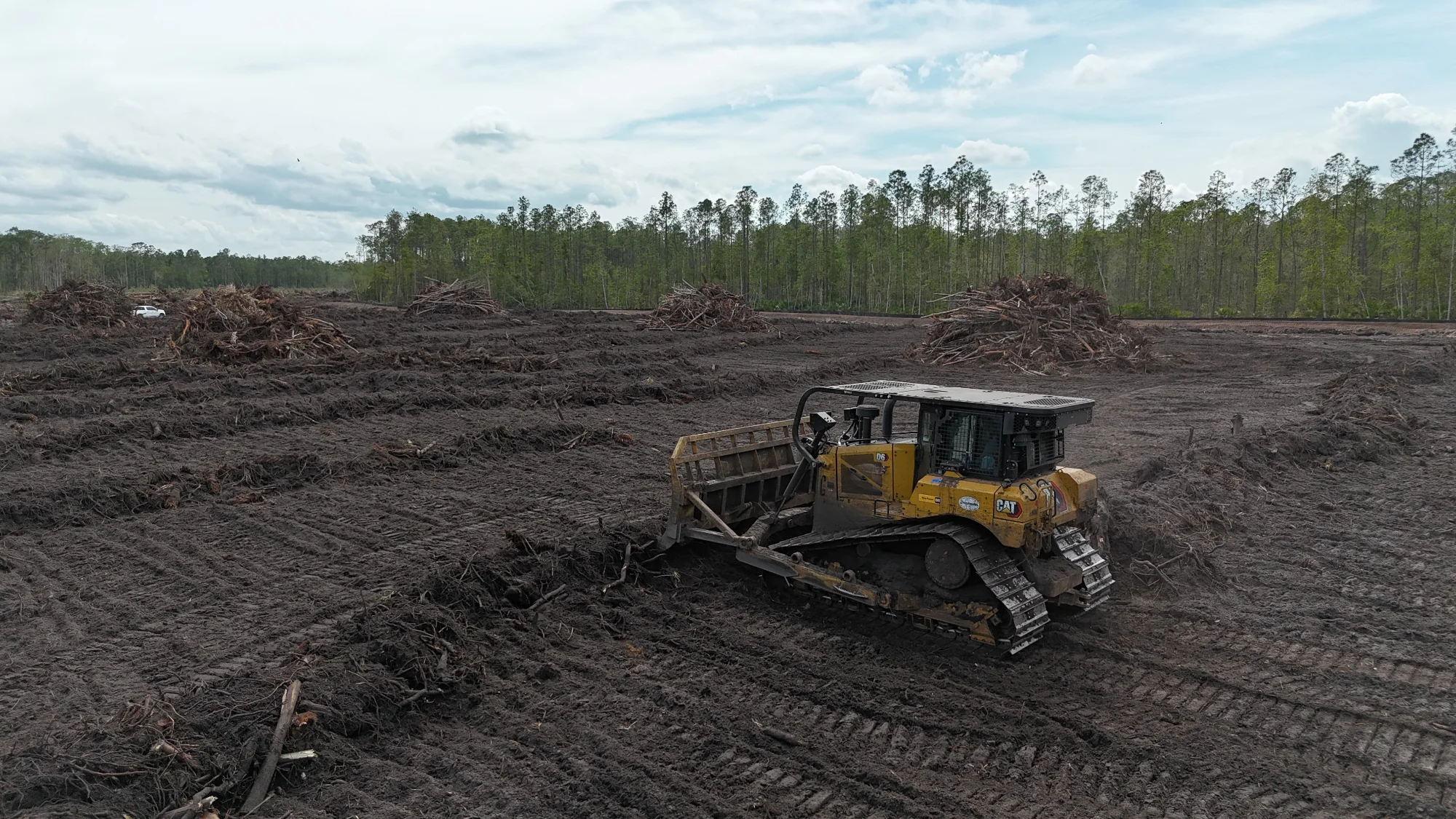
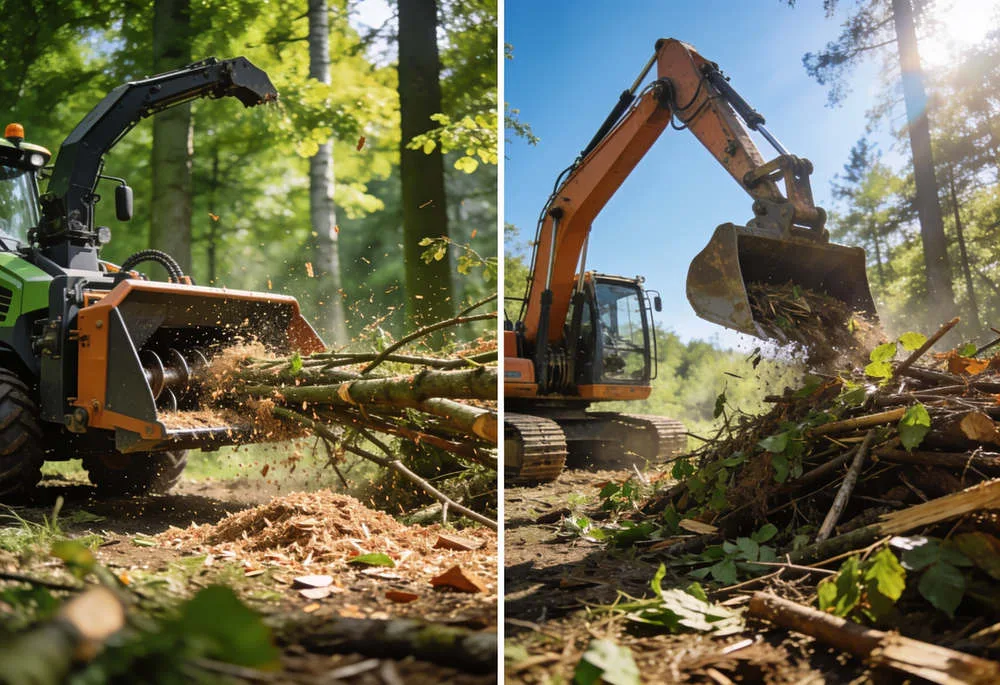
Forestry mulching is often the better choice for light to moderate brush, selective clearing, and sites where protecting topsoil matters. Traditional land clearing is better suited to full site clearance, large root systems, excavation, and projects that require vegetation and debris to be removed completely. For a property near Sanford, the right choice depends on vegetation density, future construction plans, drainage, access, and how much ground disturbance the project can tolerate.
Before choosing a method based on the lowest quote, contact Drinkwater & Drinkwater for a site recommendation or call (407) 732-4530. The wrong clearing approach can leave a property owner paying twice, first for vegetation removal and again to repair grading, drainage, or soil damage. Around Oviedo, where wooded parcels can vary considerably in vegetation and terrain, Drinkwater & Drinkwater helps landowners, homebuilders, and developers choose a method based on what the parcel actually needs.
For sites in the Orlando area, the decision often comes down to what must remain after clearing. A future homesite may need full root removal and grading, while a larger property may only need brush removed for access, visibility, fencing, or selective development. That difference matters because forestry mulching and traditional clearing solve different problems.
How forestry mulching works
Forestry mulching uses specialized equipment to grind trees, brush, vines, and other vegetation into mulch on the property. Instead of creating large piles for hauling or burning, the machine processes vegetation on site and returns the resulting organic material to the ground.
For many light to moderately overgrown parcels, professional grinding can reduce truck traffic and eliminate much of the handling associated with hauling vegetation away. The process can also leave topsoil less disturbed than excavation-based methods because it does not necessarily require digging out every root system.
Speed is another practical consideration. With fewer debris piles to load and fewer truckloads leaving the property, forestry mulching can move quickly on suitable sites. That can make it more cost effective for selective clearing, trail creation, fence-line access, pasture reclamation, and properties where the owner wants to remove unwanted growth without stripping the entire parcel.
There is a limit, though. Forestry mulching is not automatically the best answer for every wooded property.
When traditional land clearing makes more sense
Traditional land clearing is usually the more appropriate method when a site needs complete vegetation removal, root extraction, excavation, or preparation for substantial construction.
If a building pad, road, utility corridor, retention area, or other improvement will occupy the cleared ground, leaving large root systems in place may create problems later. Those roots can decay and contribute to settlement or interfere with excavation and grading.
Traditional clearing may involve heavy equipment that pushes, pulls, digs, and loads vegetation for removal. It is more intensive. It can also be exactly what a project requires.
The mistake is assuming that one method is universally cheaper. Forestry mulching may cost less on a lightly wooded site because it reduces hauling and debris handling. On a property that ultimately needs complete excavation and root removal, mulching first could add a step without eliminating the heavier work that follows.
Forestry mulching vs. traditional land clearing cost
There is no reliable flat price that applies to every Central Florida parcel. Cost depends on acreage, vegetation density, tree diameter, terrain, equipment access, soil conditions, disposal requirements, and the condition in which the site must be left.
A lightly overgrown property with brush and smaller trees may be a strong candidate for forestry mulching. Dense timber, large stumps, buried debris, or a site headed directly into major construction can shift the economics toward traditional clearing.
Property owners should also consider costs that do not appear in the initial clearing quote. These can include extra grading, drainage corrections, debris hauling, erosion repairs, equipment remobilization, and construction delays caused by incomplete site preparation.
The cheapest crew on day one is not necessarily the lowest-cost option for the completed project.
Grading and drainage belong in the decision
Clearing changes how water moves across a property. Remove vegetation carelessly, disturb the wrong soil, or create unintended low areas, and stormwater can become a problem before construction even starts.
That is especially important in Florida, where disturbed soil and runoff can trigger erosion concerns and regulatory requirements. Depending on the project and site conditions, improper stormwater management may lead to corrective work or issues involving the Florida Department of Environmental Protection.
A clearing plan should account for existing grades, future drainage, construction access, and the intended use of the land. A homeowner preparing for a new house has different requirements than a developer opening a full subdivision site. A farm owner reclaiming overgrown acreage may need something else entirely.
This is why method selection should happen before heavy equipment starts moving.
Which clearing method is right for your property?
Forestry mulching is often a practical fit when the goal is selective vegetation removal with less soil disturbance. It can work well for brush, smaller trees, access paths, overgrown acreage, and environmentally sensitive areas where full excavation is unnecessary.
Traditional clearing is generally better when the site must be opened completely and prepared for construction, utilities, roads, drainage infrastructure, or other improvements that require roots and vegetation to be removed.
Some properties need both methods. A contractor might use forestry mulching in selected areas while performing full excavation and clearing where buildings or infrastructure will go. The equipment should follow the site's purpose, not the other way around.
For a method recommendation and quote based on your Central Florida parcel, schedule a site consultation with Drinkwater & Drinkwater or call (407) 732-4530.