Poor site preparation is one of the most expensive mistakes a commercial developer can make in Florida. A project that skips proper land clearing can face drainage failures, structural settlement, and permit delays that push timelines back by weeks—sometimes months. If you're planning a development in Seminole or Orange County, what happens before the first foundation pour matters just as much as what comes after.
Drinkwater & Drinkwater has spent over 40 years working on commercial sites across Central Florida. Here's what we've learned about how land clearing directly shapes infrastructure outcomes.
Ready to get your site prep started? Call Drinkwater & Drinkwater at (407) 732-4530 for a quote.
How Does Land Clearing Affect Infrastructure Projects?
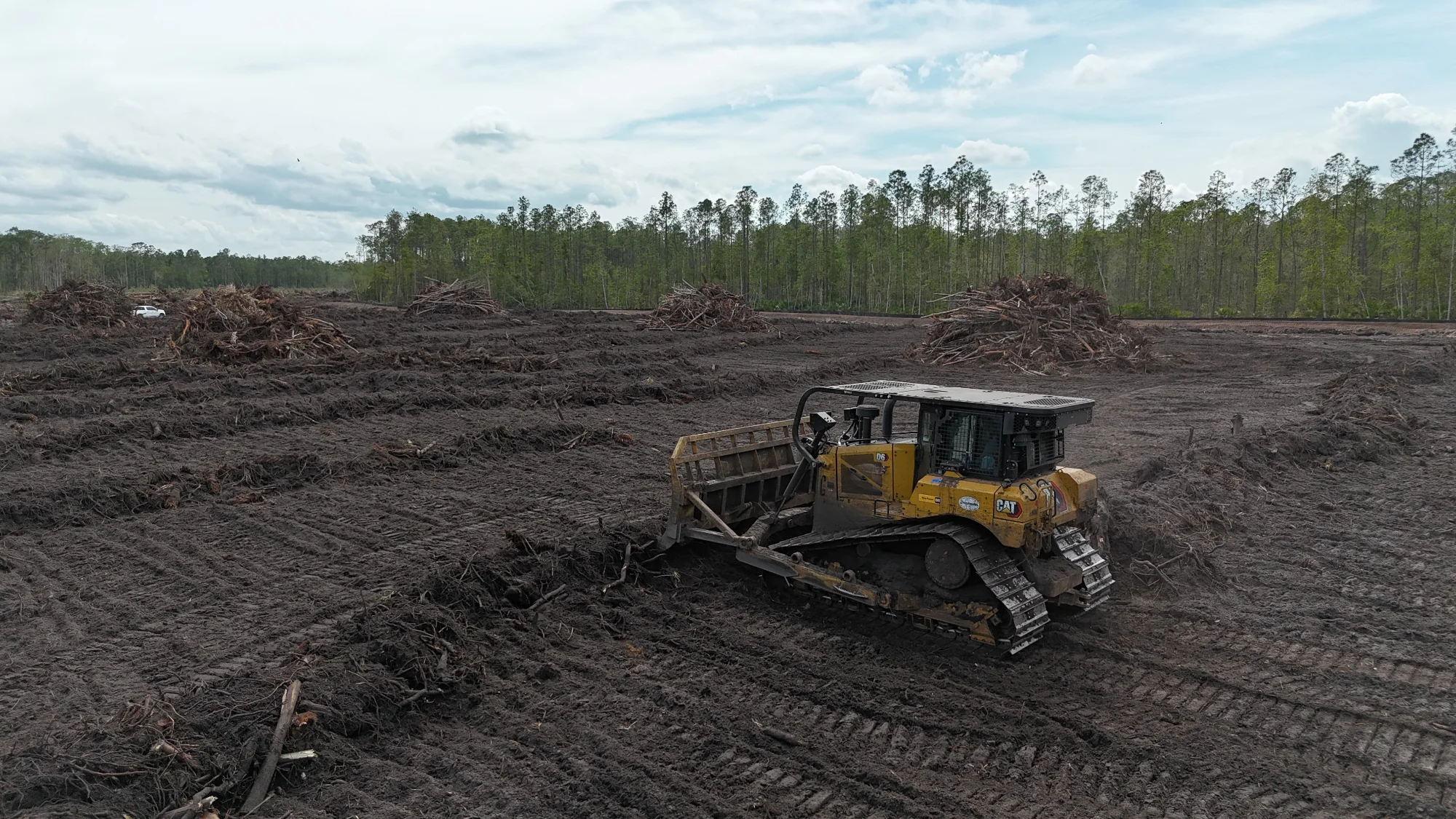
Land clearing sets the physical foundation for every system that follows: roads, utilities, stormwater management, and structural footings. Done right, it reduces long-term costs and keeps your project on schedule. Done poorly, it creates problems that show up months or years later, often in the form of settling foundations, failed drainage, or costly rework. For commercial developers in Oviedo, Florida, where rapid growth is pushing projects into areas with dense vegetation and varied soil conditions, getting this step right is non-negotiable.
What Makes Florida Terrain Uniquely Challenging for Site Prep?
Florida's sandy soils, high water tables, and protected wetland buffers create a site prep environment unlike almost anywhere else in the country. In the Oviedo area, developers regularly encounter flatwoods, palmetto scrub, and standing water that require specialized clearing approaches before grading can begin.
Seminole County requires permits for most commercial clearing work, and projects near wetlands must comply with both Florida Department of Environmental Protection (FDEP) standards and Army Corps of Engineers (USACE) jurisdictional determinations. Getting those reviews done before clearing starts can save 4 to 8 weeks on your schedule. Missing them costs far more.
Our team works closely with municipalities and county offices throughout Central Florida. We've built those relationships over decades, which means we know what inspectors look for and how to keep a job site compliant from day one.
Does Proper Land Clearing Reduce Long-Term Structural Risk?
Yes. Removing root systems, organic material, and unstable soil layers before grading prevents two of the most common infrastructure failures: differential settlement and drainage failure.
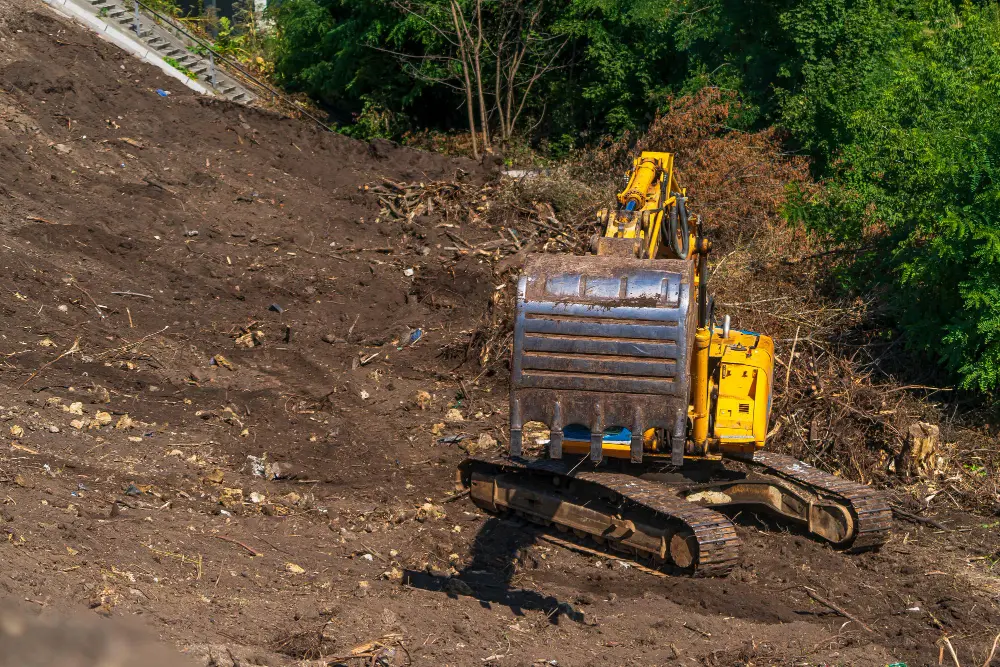
Root systems left underground decompose over time, creating voids beneath slabs and pavement. In Florida's wet season, those voids fill with water and accelerate soil movement. Our land clearing process removes material down to the depth needed for structural stability, not just surface-level vegetation.
Drainage is equally critical. A site that isn't graded correctly after clearing will pond water during Orlando's afternoon thunderstorm season, which runs from June through September. Poorly drained sites can flood retention areas, undermine utility trenches, and create liability exposure for developers. Addressing drainage at the clearing stage costs a fraction of what it takes to fix after concrete is poured.
Balancing Tree Preservation Requirements with Development Goals
Seminole County and the City of Oviedo both enforce tree mitigation ordinances that require developers to preserve or replace certain species. Live oaks, cypress, and other protected trees can't simply be removed without documentation, replacement planting plans, or mitigation fees.
The good news is that experienced clearing contractors plan around these requirements, not against them. When we work on sites near areas like Alafaya Trail or around the waterways off Lake Jesup, we identify protected trees early and design clearing boundaries that satisfy code while keeping grading plans intact. That coordination between clearing scope and preservation requirements prevents stop-work orders and change orders down the line.
Our grinding service also gives us flexibility on tighter sites. Where burning isn't permitted and space is limited, grinding lets us process debris on-site efficiently, reducing haul-off costs and keeping neighboring properties clean throughout the job.
Real Project Outcomes: What Quality Clearing Actually Delivers
We've seen the difference firsthand. On commercial projects in the Oviedo and Sanford corridor, sites that completed thorough clearing and grading before utility rough-in consistently move through inspections faster. Concrete flatwork passes compaction testing on the first try. Retention ponds grade to the designed elevations without requiring costly re-cuts.
Contrast that with sites where clearing was rushed or subcontracted to crews unfamiliar with local soil conditions. Those projects often require imported fill, additional compaction passes, or drainage corrections that weren't in the original budget. Rework on a 5-acre commercial pad can run $40,000 to $120,000, depending on the scope. That's money that doesn't show up in the original clearing bid but absolutely shows up in the final project cost.
Our equipment is maintained daily. We don't subcontract the core clearing work, which means our management team controls the pace and quality of every phase. For commercial developers who need a clearing contractor that keeps pace with downstream trades, that matters.
Partnering with Local Experts for Successful Infrastructure Planning
Land clearing in Oviedo, Florida requires more than heavy equipment. It requires local knowledge, regulatory experience, and a team that communicates clearly with every stakeholder on your project.
At Drinkwater & Drinkwater, we've completed thousands of jobs across Florida, from Jacksonville to Miami and across the panhandle. We operate simultaneously on multiple commercial projects, and we bring the same planning discipline to a 2-acre infill site in Oviedo as we do to a 200-acre master-planned development.
Your infrastructure timeline depends on what happens in the first few weeks on site. Don't let site prep be the bottleneck.
Call Drinkwater & Drinkwater at (407) 732-4530 to discuss your project and get a quote from Central Florida's most experienced land clearing contractor.