When you’re staring at a raw piece of land in Oviedo or Sanford, it’s easy to think, “It’s just trees and dirt—how complicated can it be?” But as any seasoned Florida homebuilder knows, the difference between clearing a single residential lot and prepping a commercial site is massive. It’s not just about the size of the machines; it’s about the permits, the environmental regulations, and the long-term impact on the soil.
Whether you're building a custom home in Winter Park or developing a new subdivision near Lake Nona, understanding these differences saves you money and prevents headaches with the county later. Here is what you need to know about the two distinct types of land clearing and why the approach is relevant for your next project.
Residential land clearing involves preparing a smaller tract of land for a single-family home or a small cluster of homes. This process focuses on selective removal to preserve the aesthetic value of the property while making room for the foundation, driveway, and utilities.
In Florida, residential clearing often requires a lighter touch. Homeowners and builders usually want to keep mature oak trees or preserve a natural buffer for privacy. The goal isn't just to wipe the slate clean; it's to shape the land so it’s ready for construction without destroying the local ecosystem.
Common steps in residential projects include:
Because these sites are often smaller—typically under an acre to five acres—the equipment used is more compact. We often use skid steers and smaller excavators that can maneuver around protected trees without crushing their root systems.
Commercial land clearing is a large-scale operation designed to prepare a site for businesses, parking lots, industrial parks, or large housing developments. The focus here shifts from aesthetics to stability and drainage.
When preparing a commercial site, the land generally needs to be completely stripped and graded to handle heavy loads. Think about a shopping center on Route 46 or a new office park in Maitland. These structures require massive foundations and extensive impervious surfaces (concrete and asphalt), which means the soil preparation must be much more rigorous.
Commercial clearing involves:
The stakes are higher with commercial clearing. A mistake in grading here doesn’t just mean a puddle in the backyard; it could mean the retention pond fails during the next hurricane, flooding the parking lot.
While the end goal—a buildable site—is the same, the path to getting there varies significantly.
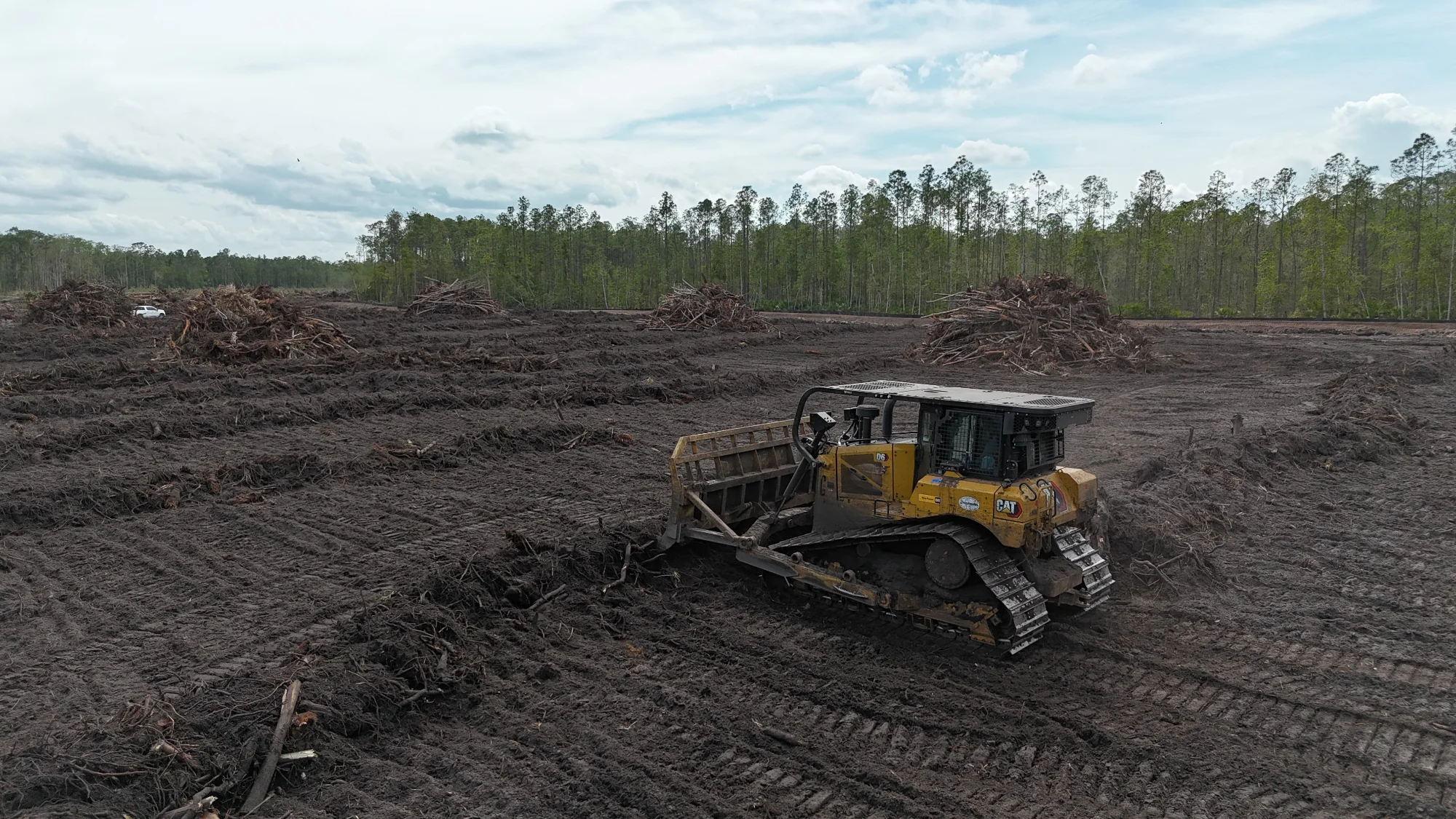
Residential jobs often use smaller, agile machinery. We might bring in a forestry mulcher to handle underbrush on a half-acre lot in Oviedo. For a 20-acre commercial site, however, we are rolling out D6 bulldozers and large excavators to move serious earth. The scale dictates the tools, and using the wrong equipment can either damage a residential lot or cause costly delays on a commercial one.
This is where Florida law gets tricky. Land clearing for a single home usually falls under a standard building permit, though you still need to watch out for tree protection ordinances in places like Winter Park. Commercial projects face a gauntlet of approvals: Water Management District permits, Department of Environmental Protection (DEP) reviews, and strict stormwater runoff calculations.
Commercial clearing has a much larger environmental footprint. Because you're often replacing natural ground cover with concrete, the drainage requirements are intense. Residential clearing is generally friendlier to the land, maintaining more natural absorption areas.
Budgeting for land clearing isn't one-size-fits-all. The cost varies wildly based on location, vegetation density, and what lies beneath the soil.
For residential projects, costs are often determined by the acre or the lot. Clearing a standard quarter-acre lot with light brush might cost between $1,500 and $3,000, whereas a heavily wooded lot with large pines and oaks could run $4,000 to $7,000. Accessibility is a huge factor here—if we can’t get the big trucks in because of a narrow driveway or low-hanging wires, the price goes up because the work takes longer.
Commercial projects are priced differently, often by the total scope, including grading and debris removal. You might be looking at $3,000 to $5,000 per acre for simple clearing, but once you add in grubbing (removing roots), grading, and storm prep, costs can easily exceed $10,000 per acre.
Key variables that change the price:
You wouldn't hire a plumber to wire your house, and you shouldn't hire a general handyman to clear your land. In Florida, the specific challenges of sandy soil, wetlands, and protected wildlife mean you need a licensed specialist.
When looking for a partner for land clearing Oviedo Florida homebuilders need to verify a few things:
We operate right here in Central Florida, so we know that digging in Sanford is different than digging in Clermont. That local expertise prevents the kind of rookie mistakes that get permits flagged and projects shut down.
Whether you're building a dream home or breaking ground on a new business, the dirt work is the foundation of everything that follows. Understanding the difference between residential and commercial clearing ensures you budget correctly and stay compliant with county codes.
Don't let the brush hold you back. If you're looking for reliable land clearing Oviedo Florida builders trust, we are here to help you get your site ready.
Need a quote for your next project? Contact Drinkwater & Drinkwater at (407) 732-4530 today. We’ll walk the property with you and give you an honest assessment of what needs to be done.

Copyright © 2023. All Rights Reserved.
Web Design, SEO & Hosting by REK Marketing & Design