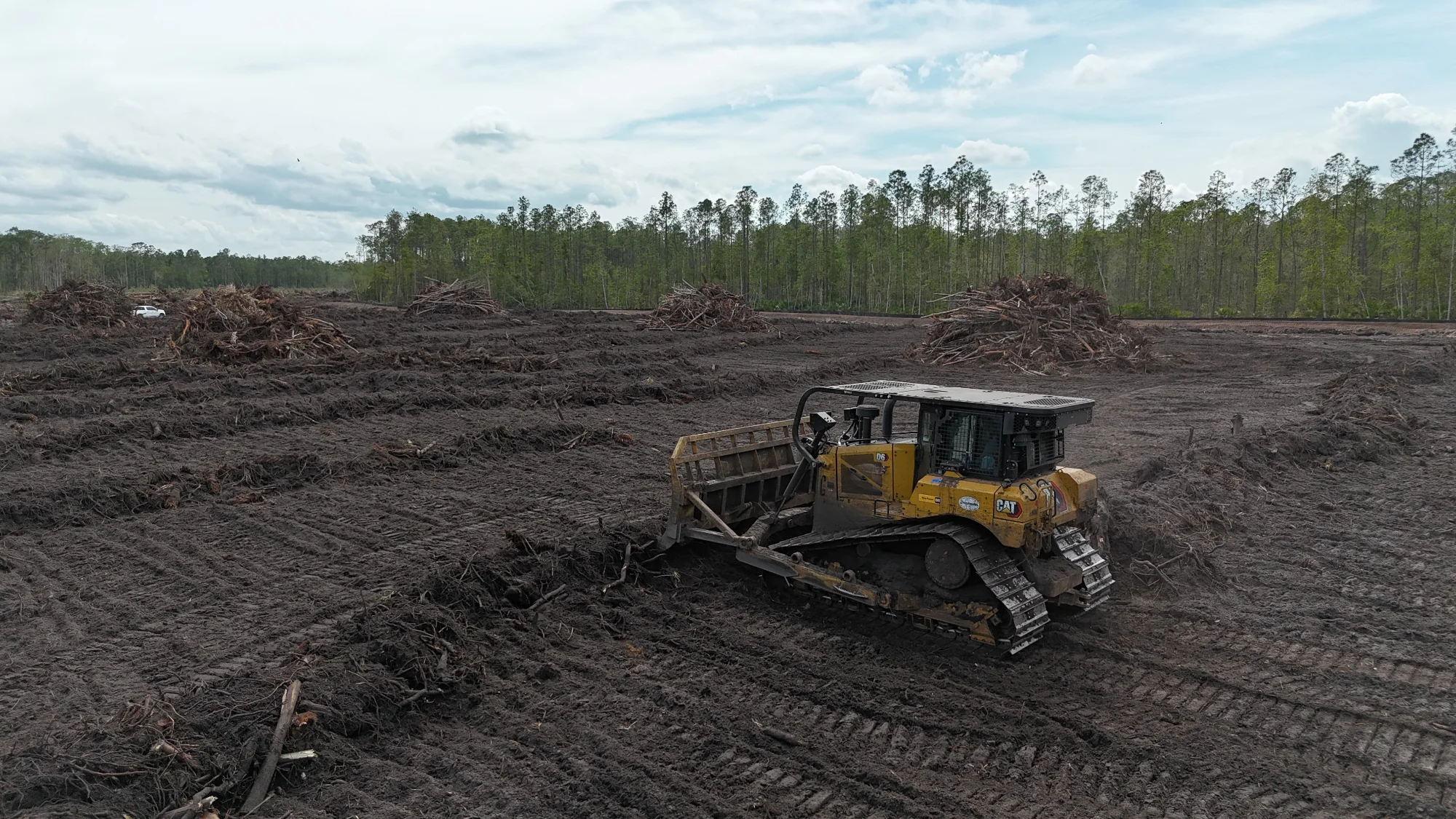

Building a new home in Sanford, Florida starts long before the first concrete truck arrives. The site preparation phase is where projects succeed or fail, and skipping steps here can cost you thousands of dollars in delays, failed inspections, and structural repairs down the road.
If you're a farm owner in the Seminole County area looking to build on your land, this guide walks you through every phase of the process, from the first survey stakes to the final utility trenches. And if you'd rather leave it to the pros, Drinkwater & Drinkwater is ready to help. Call (407) 732-4530 to talk through your project.
Phase 1: Land Surveying and Boundary Marking
How Long Does Surveying Take Before Construction?
A standard land survey in Florida typically takes 1 to 3 weeks from the time you hire a licensed surveyor to the time you receive a completed boundary report. Rush orders can sometimes be done in 3 to 5 business days for an additional fee, often $200 to $500 more than the standard rate.
Surveying does more than confirm your property lines. It identifies setback requirements, easements, flood zone classifications, and any encroachments that could affect your building footprint. In Seminole County, this step directly impacts the permits you'll need and where on your lot construction can legally begin.
Skipping this step isn't an option. Florida building officials require a current survey before issuing any residential construction permit.
Phase 2: Clearing the Lot and Debris Removal
What's Involved in Land Clearing for New Construction?
Land clearing removes trees, brush, stumps, and surface debris to prepare a clean building pad. For a typical 1- to 5-acre lot in Central Florida, expect clearing to take 2 to 5 days, depending on vegetation density and equipment access.
Costs range from $1,500 to $6,000 or more for residential lots, with heavily wooded properties on the higher end of that scale.
Farms and rural properties near Sanford, particularly in areas like Lake Monroe and the surrounding agricultural zones, often have mature oaks, palmettos, and dense undergrowth that require heavy equipment and a detailed removal plan. Our crews handle this regularly. We've seen properties where clearing alone uncovers drainage issues and old fence lines that would've created serious problems during foundation work.
One important service to consider alongside clearing is grinding. When burning isn't permitted, grinding stumps and woody debris in place is the fastest and cleanest way to process material on-site. It keeps the job moving and removes the need to haul debris off-property, which cuts both time and cost.
Land clearing in Sanford, Florida must comply with local tree preservation ordinances. Certain species require removal permits, so checking with Seminole County before crews start cutting is a must.
Phase 3: Soil Testing and Compaction for Stability
Does Florida's Sandy Soil Affect My Home's Foundation?
Yes, significantly. Florida's sandy soil compresses unevenly under load, which causes settling and can crack slabs or shift framing over time. Proper soil testing and compaction before construction reduces this risk by 60 to 70% compared to building on untreated native soil.
A geotechnical soil report costs between $500 and $1,500 for a standard residential site. The report tells your engineer whether the existing soil can support your foundation or whether fill material needs to be brought in.
Compaction is then done with plate compactors and rollers in lifts, typically 6 to 8 inches at a time, until the soil reaches the density specified by your engineer. Skipping this step is one of the most common mistakes we see on DIY-managed builds.
Phase 4: Grading and Strategic Drainage Planning
How Do You Grade a Lot Properly in Florida?
Grading means reshaping the surface of your land so water flows away from your foundation rather than pooling around it. In Florida, where afternoon rainstorms can dump 2 to 3 inches of rain in under an hour, poor grading leads directly to flooding, erosion, and foundation damage.
The Florida Building Code requires positive drainage away from the foundation at a minimum slope of 6 inches over the first 10 feet. Your grading plan should reflect this and account for neighboring properties and roadside drainage.
For farm properties with large acreage, grading also affects how efficiently you can use the rest of your land after construction. Proper planning at this stage prevents drainage problems on both your new structure and your existing agricultural areas.
Land clearing in Sanford, Florida, often intersects with grading work when vegetation removal exposes low spots and natural drainage channels that weren't visible before clearing. Addressing these during grading, rather than after, saves considerable time.
Phase 5: Trenching for Underground Utilities
When Should Underground Utilities Be Installed?
Underground utilities, including water, sewer, electrical conduit, and communications lines, should be trenched and installed after grading is complete but before any concrete is poured. This sequencing prevents you from having to saw-cut or excavate finished slabs later, which adds $3,000 to $10,000 or more to a project, depending on scope.
In Seminole County, utility work requires separate permits for each trade. Electrical, plumbing, and communications utilities each have their own inspection requirements. Budget 2 to 4 weeks for this phase on a standard residential build.
Call 811 before any digging begins. Florida law requires it, and locating existing underground lines protects your crew and prevents costly damage to active utilities.
Final Checklist for Local Regulatory Compliance
Before construction begins in earnest, confirm you've completed the following:
- Boundary survey filed with Seminole County
- Tree removal permits obtained for protected species
- Geotechnical report reviewed and signed by a licensed engineer
- Grading and drainage plan approved by the county
- Building permit issued by Seminole County Building Division
- Utility permits pulled for electrical, plumbing, and communications
- Call 811 completed at least 2 business days before excavation
Florida's permitting timeline varies, but for a standard new home build in Sanford or surrounding areas, plan for 4 to 8 weeks from permit application to approval. Projects near Lake Monroe or in flood zone areas may require additional environmental review, which adds time.
Land clearing in Sanford, Florida and the surrounding Seminole County region follows state and local codes that change periodically. Working with a contractor who already has established relationships with local municipalities keeps your project on schedule.
Ready to Start Your Site Prep?
Getting the site prep right the first time is the difference between a build that runs on schedule and one that drags on for months with costly do-overs. Drinkwater & Drinkwater has been handling land clearing and site preparation across Central Florida for over 40 years, with thousands of completed jobs and a fleet of equipment ready for your property. Call us at (407) 732-4530 to talk through your project and get a quote.